


|
InformMed
InformMed is a leading provider of medication safety solutions. The InformMed system uniquely completes a closed loop medication delivery system by assisting nurses in preventing wrong dose errors that are not addressed by other medication safety solutions. InformMed provides nurses with the ability to accurately calculate doses and volumes, access essential drug information where and when needed, recognize unsafe orders and facilitate independent double-checks of all doses and infusion pump settings. InformMed is your point-of-care ally giving nurses and patients peace of mind more easily, quickly, and affordably than other technology solutions.
ally from InformMed:
ally is a mobile, evidenced-based decision support tool designed to empower nurses as the last safety net in the medication delivery process for the most harmful drugs (paralytics, narcotics, anticoagulants, insulin, etc.) delivered in the most vulnerable situations (emergently via syringe or continuous IV without an electronic order reviewed by a pharmacist). The system operates on point-of-care devices designed to fit into the workflow of nurses.
ally stands behind you whether:
- Preparing and calculating emergent dose volumes
- Documenting and labeling doses in the OR, ED
- Double-checking pump settings, volumes or orders
- Checking orders at shift change or with a transfer
Why ally?
Harmful dosing errors are still reaching patients despite manual and technological improvement efforts.
ally provides the missing piece in the medication safety technology puzzle - complementing clinical expertise and coexisting with other medication safety technologies.
|
|
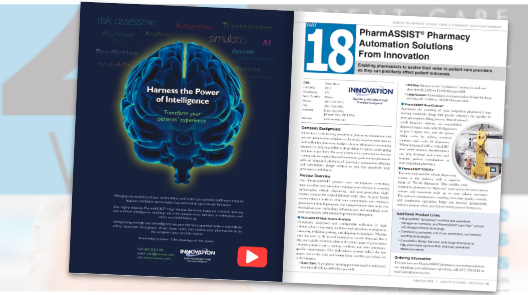
Drug Verification Technology to decrease medication errors and increase Accuracy InforMed u enhanced validation systems photoemission spectroscopy, lasers, barcoding, medication verification to identify and manage regulatory compliance for counterfeit medication and medication signatures, medication error, liquid medication check. IV admixture verification technology
|
Rudolph Research Analytical
Quality • Integrity • Innovation
J57TPN AUTOMATIC REFRACTOMETER
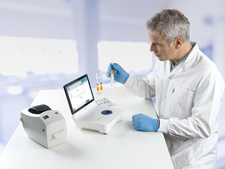
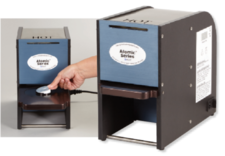
The J57TPN is intended for use in hospital pharmacies to monitor the quality of parenteral nutrition mixtures and ensure compliance with USP<797>. It is also useful in preventing the diversion of narcotics and other controlled materials. The J57TPN provides a fast, easy to use way to check on materials returned from the operation theater or incorrectly issued from the pharmacy.
Application
The first decade of the 21st Century has seen dramatic changes in health system pharmacies. New regulations such as USP<797> are forcing compounding pharmacies to do quality checks that were previously only required of pharmaceutical manufacturers. The J57TPN from Rudolph Research Analytical is designed to comply with this new regulatory environment.
Drug Diversion Monitoring
The J57TPN also doubles as a refractometer to monitor potential drug diversion issues. Ever more strict laws mean a health system must be aware of what is happening with controlled substances. Measuring operating theater returns and similar movements of controlled substances can be a key part of an organization's policy on meeting these laws.
Automatic Measuring System
The J57TPN features a fully automatic measuring system. The operator simply places the sample on the prism, presses a button and the result is displayed on a 7.5cm x 10cm backlit LCD. There are no shadow lines to match and there is no eyepiece requiring operator determination or manual adjustment.
Pharmacy Relevant Calculations
The J57TPN has built-in comparison and calculations. The user enters the % Dextrose and % Amino Acid and the instrument displays both the calculated and measured result, making it easy for an operator to see if the material is within specification.
Electronic Temperature Control
Refractive Index is a temperature sensitive property. For many years pharmacies largely ignored this fact or used sugar based temperature correction. Pharmaceutical manufacturers who were constrained by USP guidelines were not able to ignore this as USP<831> clearly states that they had to measure at a controlled temperature, generally 20°C. Now that pharmacies are under similar pressure, temperature sensitivity also must be considered. Fortunately with the J57TPN, old style circulating baths are a thing of the past and sucrose based mathematical approximations are not needed because of the instrument's built in electronic heating and cooling which ensures the sample is measured at 20°C every time.
For over fifty years Rudolph has dedicated itself to manufacturing quality instruments and providing superior technical and service support. With over 2000 instruments installed worldwide and hundreds still in operation after 20 years of service, Rudolph understands the demands of today's laboratories for durability and reliability.
No matter what the application, Rudolph's complete line of polarimeters, saccharimeters, refractometers and accessories can meet your laboratory's needs for accuracy, reliability and performance.
Rudolph Research Analytical manufactures high precision refractometers for research laboratory and QC applications. Our J Series product line includes standard and wide range units, including the J57, J157, J257 and J357 refractometers. Electronic temperature control is standard on all of our refractometers, eliminating the need for waterbaths-resulting in cost savings and avoidance of possible contamination. Learn how Rudolph Research Analytical J Series refractometers differ from the traditional Abbe refractometer, by eliminating the need for prism replacement.
|
|
J57TPN AUTOMATIC REFRACTOMETER USP<797> polarimeters saccharimeters Rudolph Research Analytical J57, J157, J257 J357
|
|
ValiMed Medication Validation System from CDEX Inc
We are proud to introduce our newly upgraded medication validation system that uses Enhanced Photoemission Spectroscopy to provide an efficient and cost-effective means to validate medication before it leaves the pharmacy and to provide assurance of what comes back.
|
Centice – PASS Rx – PINPOINT Rx – Pharmaceutical Authentication Sensor System
The PASS Rx System verifies the majority of solid capsule and tablet pharmaceuticals in everyday workflow offering the most reliable solution to manage dispensing errors on the market today. PASS Rx is an easy to implement, extra measure of assurance that enables pharmacists and technicians to provide patients with the highest quality of care. Centice Corporation, a leader in drug verification, leverages its unique sensor technologies to empower pharmacists and other health care professionals to increase efficiency, optimize workflow and assure improved quality of dispensed medications. |
 |
|
 |
Preeclampsia
Provided by: American College of Emergency Physicians
After reading this article, the physician should be able to:
* Identify patients who are at risk for preeclampsia.
* Understand the diagnostic criteria of preeclampsia.
* Treat pregnancy-induced hypertension, preeclampsia, and eclampsia.
... |
 |
CT Teaching Manual
Provided by: Advanced Health Education Center
Get started learning the principles of Computed Tomography (CT)
This concise and easy to understand book about the principles of CT will allow you to get started learning one of the hottest technologies in radiology. Information on the technical aspects, the role of contrast media, with some sectional anatomy and pathology are included. You will... |
 |
MRI Differential Diagnosis of Synovial Disease A Systematic Approach
Provided by: PROSCAN Imaging Education Foundation
The ProScan Imaging Education Foundation's all-new Professional MRI Series provides a comprehensive educational program that encompasses a broad survey of up-to-date radiological knowledge in the neurological and musculoskeletal realms. Lectures address in-depth discussions of neuroradiology of the brain, spine, head and neck, and pediatric imaging... |
 |
"The New Business of Medicine" Series
Provided by: University of Pennsylvania School of Medicine
ACTIVITY DESCRIPTION
The New Business of Medicine Series is an entire curriculum of 8 CME-certified modules in the area of practice management. Stemming from identified gaps in practice management and related educational needs, the modules focus on how to improve practice with the ultimate goal of improving the delivery of care to patients. Inte... |
 |
Essential Tips for Ohio Dental Radiographers
Provided by: Academy of Dental Learning
This quick moving course provides a summation of the Shadow- Casting concept as it compares the Parallel Technique with Bisecting the Angle. Many "tricks" are revealed to maneuver around problematic oral conditions. These include Bisecting the Angle, Moving the Image by Moving Only the Cone, the Clark Shift and the MBD Rule. It also provides a comp... |
 |
SET 4-Volume Liver MRI Series
Provided by: PROSCAN Imaging Education Foundation
The Master's Series features Dr. Stephen J. Pomeranz's most advanced lectures on diagnostic imaging to date. These intense and detailed presentations will focus on the topics of orthopaedic, neurologic, and body imaging. Each title in the series will examine subjects such as subtle interpretative techniques, anatomic detail, mastery of key technica... |


 |
3-Volume Soft Tissue Lesions Set
Provided by: PROSCAN Imaging Education Foundation
The ProScan Imaging Education Foundation's all-new Professional MRI Series provides a comprehensive educational program that encompasses a broad survey of up-to-date radiological knowledge in the neurological and musculoskeletal realms. Lectures address in-depth discussions of neuroradiology of the brain, spine, head and neck, and pediatric imaging... |
 |
Medical Marijuana: Therapeutic Uses and Legal Status
Provided by: U.S. Pharmacist
After completing this activity, participants should be able to:
1. List the potential therapeutic applications of marijuana.
2. Describe the effects of marijuana on the central nervous system and other organ systems.
3. Recognize the advantages and disadvantages of synthetic cannabinoids and smoked marijuana.
4. Describe the different ... |
 |
Instability After Total Knee Replacement
Provided by: American Academy of Orthopaedic Surgeons
After completing this CME module, participants will be able to
1. Discriminate between the three main types of instability following TKR.
2. Explain the causes of instability after TKR.
3. Describe physical examination tests and imaging studies helpful in confirming the diagnosis of instability in TKR patients and in guiding managemen... |
 |
Infant Formulas: Safe Alternatives to Breast Milk in Many Situations
Provided by: U.S. Pharmacist
After completing this program, participants should be able to:
1. Recognize the optimum nutrition for infants through the first year of life-breast milk;*
2. Describe the role of formulas as adequate substitutes for term infants whose mothers cannot or choose not to breast-feed;*
3. Review regulations ensuring infant formula quality and s... |
 |
2011 Complete Coding Update Webinar Series
Provided by: American Association of Professional Coders
Webinar Series Details:
* Live three-part webinar series with expert analysis and live Q/A
* On-demand access to full webinar broadcasts -viewable online or download to your PC, video compatible iPod/iPhone and MP3 player
* Printable rationale manual that explains the \"why\", not just the \"what\", behind the changes
* PowerP... |
 |
Use of Home Pain Medications After Pediatric Orthopaedic Procedures
Provided by: American Academy of Orthopaedic Surgeons
After completing this CME module, participants will be able to
1. Describe current methods and tools to assess the level of pain in a child, including use of the FLACC, VAS, and FPS-R pain scales.
2. Explain patient-to-patient variability with regard to the categorization of pain.
3. Discriminate between the three main categories of p... |
 |
Insights into Pain Management - Module 6: Use and Abuse of Opioid Analgesics
Provided by: University of Pennsylvania School of Medicine
Insights into Pain Management -
Module 6: Use and Abuse of Opioid Analgesics
Faculty: Rollin M. Gallagher, MD, MPH
Director of Pain Management
Department of Anesthesiology
Philadelphia VA Medical Center
Philadelphia, Pennsylvania
Estimated Time to Complete: 1 hour
Credit: Up to 1 AMA PRA Category 1 Creditâ„¢
Fee: No charge
Original... |
 |
Prescription Errors and Their Legal Consequences: Best Practices for Prevention
Provided by: Power-Pak C.E.®
This program is designed to investigate possible causes of prescription medication errors from a legal standpoint by providing the most current data available and presenting strategies to improve safety in health care. ... |
 |
Adverse Reactions to Latex Products: Preventive and Therapeutic Strategies for Oral Healthcare Settings
Provided by: Academy of General Dentistry
This continuing education course is intended for dentists, dental hygienists, and dental assistants. It is based on a review of the literature and presents the etiology and epidemiology of adverse reactions to latex products, clinical manifestations of adverse reactions to latex products, and strategies for the prevention and treatment of adverse r... |
 |
Cognitive Outcomes After On-Versus Off-Pump Coronary Artery Bypass Surgery
Provided by: American Association for Thoracic Surgery
Learning Objectives
After reading this article, the learner should be able to:
* understand comparative cognitive outcomes in patients having on-pump vs off-pump CABG surgery
* recall patient characteristics predictive of cognitive impairment after CABG surgery
* remember patient characteristics predictive of comparative cognitive ou... |
 |
Internal Medicine 1414
Provided by: CMEweb.com
**Objectives:**
* describe new findings in differential diagnosis and treatment of various diseases
* describe controversies, advantages, and disadvantages of those advances
* describe cost-effective treatment regimens
* describe the pros and cons of new screening procedures.... |
 |
A Review of Recently Approved Drugs
Provided by: Purdue University - College of Pharmacy
Learning Objectives 1) Identify the pharmacological and/or therapeutic classification. 2) Describe the approved indication. 3) Recognize the basic mechanism of action. 4) Describe common adverse effects. 5) Recognize clinically relevant drug interactions. 6) Illustrate important patient information. 7) Recognize an appropriate dosage regimen. ... |
 |
Prescribing Controlled Substances
Provided by: Medical Interactive Community
Prescribing Controlled Substances has increased dramatically over the past two decades. Along with it, there has been an increase in patient mortality and medical malpractice claims. Prescribing controlled substances presents a conundrum for physicians and practitioners: adequately treating patients for pain and other problems while avoiding the h... |
 |
Diabetes, Type 2
Provided by: Wild Iris Medical Education
Upon completion of this course, you will be able to:
* Distinguish type 2 diabetes from type 1 diabetes.
* Trace the normal physiology of sugar in the body.
* Describe the underlying disorders of insulin resistance and beta cell abnormalities.
* State the medical criteria for diagnosing diabetes and describe the initial workup.
* Discuss the... |
 |
Diagnostic Value of Hemoglobin A1c and Fasting Plasma Glucose Levels in Coronary Artery Bypass Grafting Patients With Undiagnosed Diabetes Mellitus
Provided by: The Society of Thoracic Surgeons
After reading this article, the learner should be able to:
* understand the role as well as the sensitivity and specificity of fasting plasma glucose and hemoglobin A1c measurements for the diagnosis of diabetes
* become aware of the prevalence of diabetes in patients undergoing coronary artery bypass grafting
* recognize that while asy... |
 |
Achieving Cultural Competency: A Case-based Approach to Training Health Professionals
The Case of Priya Krishnamurthy
73-year-old Asian-Indian woman with a stroke
Provided by: University of Pennsylvania School of Medicine
Learning objectives
Upon completion of this activity, participants should be better able to:
* Associate that interpretation from one language to another can impair the assessment of cognitive and language disorders.
* Remember that alternative medical treatments are encountered in nearly all cultures and may conflict with standard (Western) m... |
 |
BDX2 Technique of Auscultation and Valve Closure Sounds
Provided by: CMElectures
Michael S. Feldman, MD, is Clinical Professor of Medicine at the University of Pennsylvania School of Medicine, and chairman of Graduate Education Foundation. Bernard Segal, MD, is professor of medicine at Thomas Jefferson University Hospital, and director of the Jefferson Heart Institute. Here, they discuss auscultation technique and valve closure... |
 |
Pneumonia, Community-Acquired
Provided by: CMElectures
Robert Bettiker, MD, is associate professor of medicine, Section of Infectious Diseases, Temple University Hospital, Philadelphia, Pa. Here, he discusses the pathophysiology, epidemiology, causes and treatment of community acquired pneumonia (CAP)... and describes the use of the Pneumonia Severity Index Rule in management of CAP. Gregory Mayro, MD,... |
 |
Complications of Continuous Ambulatory Peritoneal Dialysis
Provided by: Radiological Society of North America
Learning Objectives: 1) Identify the causes of complications of CAPD. 2) Recognize the imaging features of complications of CAPD. 3)Describe the strengths and weaknesses of different imaging modalities for the diagnosis of CAPD complications.... |
 |
Addressing Barriers to Optimal Care of Patients with MDD and GAD in the Long-Term Care Setting: The Pharmacy Perspective
Provided by: American Society of Consultant Pharmacists
At the end of this knowledge-based CPE activity, participants should be able to:
Recognize barriers to the optimal care of the older patient with depression and anxiety and develop one strategy to address these barriers in your practice.
Critically analyze current treatments for MDD and GAD in the older patient and assess both their risk and... |
 |
Getting Started in Preclinical Imaging
Provided by: SNM Advancing Molecular Imaging and Therapy
Getting Started in Preclinical Imaging... |
 |
Obsessive-Compulsive Disorder
Provided by: NetCE
Obsessive-compulsive disorder (OCD) is a debilitating psychiatric illness affecting approximately 1% of the population. Characterized by recurrent thoughts or worries (obsessions) and a strong desire to perform certain actions or activities (compulsions), OCD has a significant effect on day-to-day functioning and on quality of life. Unfortunately, ... |
 |
Breast Implant Complications on MR
Provided by: PROSCAN Imaging Education Foundation
Breast MRI is reported as valuable in detecting cancer in women who have a personal history of breast cancer, those patients with greater than 25% lifetime risk of breast cancer, and those with dense breasts -a condition associated with breast cancer risk but which decreases the sensitivity of the gold standard screening exam, mammography. MRI help... |
 |
MRI of the Spine Trauma -Overview
Provided by: PROSCAN Imaging Education Foundation
The ProScan Imaging Education Foundation's all-new Professional MRI Series provides a comprehensive educational program that encompasses a broad survey of up-to-date radiological knowledge in the neurological and musculoskeletal realms. Lectures address in-depth discussions of neuroradiology of the brain, spine, head and neck, and pediatric imaging... |
 |
|
|