


TUG® The Automated Robotic Delivery System
The demands on today's hospital pharmacies are greater than ever before. With advances in pharmaceutical treatments and patient protocols, pharmacists and pharmacy technicians must remain focused on ensuring accurate medication fulfillment and minimizing adverse drug interactions and side effects.
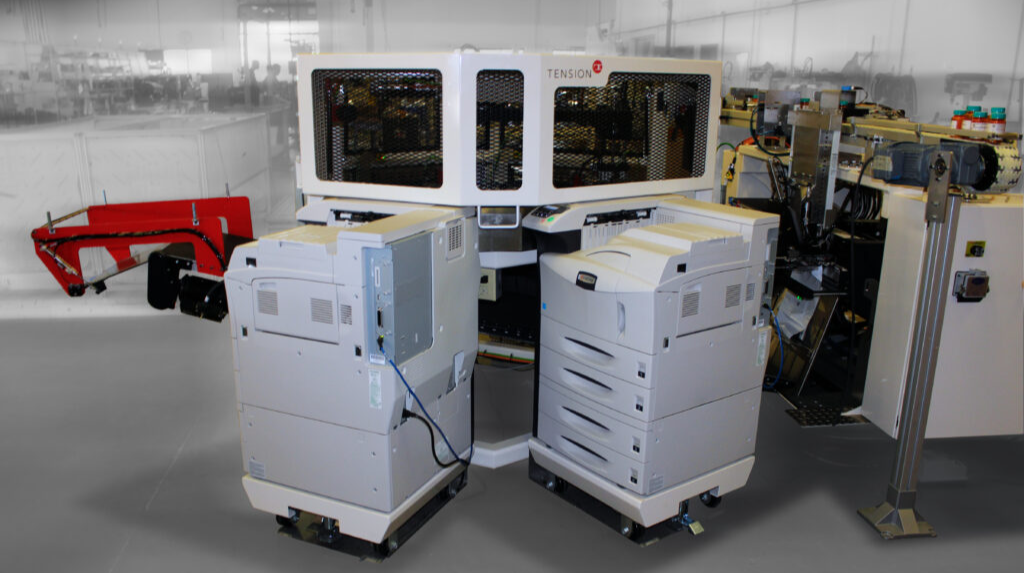
Aethon's automated robotic delivery solution, TUG®, allows the pharmacy to improve the frequency and reliability of medication deliveries, ensuring secure scheduled and on-demand distribution from the pharmacy to the nurses' station. With its state-of-the art delivery technology, TUG can easily navigate through hallways, doorways, elevators, and even narrow aisle ways with human traffic to ensure safe, timely, and accurate delivery every time.
With its 24/7 availability, nurses no longer need to waste time tracking down medications during night and weekend shifts, leading to increased time at the patients' bedside, better outcomes, and patient and employee satisfaction. Staff shortages and off-shift coverage are no longer an issue with TUG managing the delivery process.
Benefits:
- Keep up with the growing demand for new orders needed on the nursing unit
- Reduced order-to-delivery time
- Refocus pharmacy staff on their core functions, reducing medical errors.
- Increased nurse time at the bedside
For more information on how TUG can benefit your hospital, please contact Aethon.
|
|
tug aethon automation robotics hospital pharmacy nursing stations automatic guided vehicles
|
Swisslog
Save Time and Reduce Manual Transport
A Swisslog autonomous mobile robot (AMR) dramatically reduces manual transport tasks within hospitals and independent laboratories. With a payload capacity of 50 lbs, AMRs shorten turnaround time and increase operational efficiency by returning man-hours for valueadded work. AMRs require no facility modification, install quickly, and are easy to maintain and use. Laser guidance enables avoidance of people and objects for safe operation in any environment.
SpeciMinder ™ for INTRA-Laboratory Transport
Swisslog’s SpeciMinder™ dispatches and delivers scheduled and on-demand batch payloads of specimens, tissues and other laboratory items between intra-laboratory workstations. Provides either on-demand or scheduled transport of batch loads weighing up to 50 pounds, thereby filling the materials transport void between our pneumatic tube system (on-demand light loads) and our automated guided vehicle system (scheduled heavy bulk loads).
Benefits:
- Shortens turnaround time for validated lab results
- Reduces manual transport of specimen batches
- Lowers operating cost with fast ROI
- Improves workflow process
SpeciMinder also improves the efficiency of laboratory personnel because they no longer must leave their workstation to deliver specimens throughout the laboratory. It is not uncommon that up to four hours per 24-hour staff shift are spent carrying specimens between the receiving area and lab locations. One SpeciMinder can efficiently move samples up to 12 to 16 hours per day. SpeciMinder requires Virtually No facility modification Unlike other conveying systems, can navigate any environment without lines, beacons, reflectors, magnets or tape because each robot is guided by an electronic map that is used to dynamically plan the best route to a selected destination.
Simple to Use
Once SpeciMinder’s payload tray is loaded, a destination is selected and the automated robot selects the most efficient route to deliver the specimens.
Designed with Safety in Mind
|
|
Hospital asset delivery systems for hospital labs, pharmacies, dietary & food service, environmental services and nursing stations. These systems use RFID, GPS and track mobility and tracking. Aethon Tug robot asset transporting and tracking system and Swisslog TransCar automated material transport robot. Courier robots use courrier software to automatic robot delivery systems. Laser guided and RFID helps track assets during delivery to patient rooms and nursing stations. Medication cart and obstacle detection on AGV systems. Robotic Material Transport for Hospital Labs and Pharmacies
|
|
AGV overview from Wikipedia 2010
Overview
An automated guided vehicle or automatic guided vehicle (AGV) is a mobile robot that follows markers, GPS or wires in the floor, or uses vision or lasers. They are most often used in industrial applications as well as hospitals and labs to move materials around a manufacturing facility, hospital, lab, nursing stations/floors, food service or a warehouse. Application of the automatic guided vehicle has broadened during the late 20th century and they are no longer restricted to industrial environments. Automated guided vehicles (AGVs) increase efficiency and reduce costs by helping to automate a manufacturing facility, warehouse or hospital departments.
AGVs can carry loads or tow objects behind them in trailers to which they can autonomously attach. The trailers can be used to move raw materials or finished product. The AGV can also store objects on a bed. The objects can be placed on a set of motorized rollers (conveyor) and then pushed off by reversing them. Some AGVs use fork lifts to lift objects for storage. AGVs are employed in nearly every industry, including, pulp, paper, metals, newspaper, healthcare and general manufacturing. Transporting materials such as food, linen, dietary delivery, lab specimens or medication in hospitals is also done.
An AGV can also be called a laser guided vehicle (LGV) or self-guided vehicle (SGV). Lower cost versions of AGVs are often called Automated Guided Carts (AGCs) and are usually guided by magnetic tape. AGCs are available in a variety of models and can be used to move products on an assembly line, transport goods throughout a plant or warehouse, and deliver loads to and from stretch wrappers and roller conveyors.
The first AGV was brought to market in the 1950s, by Barrett Electronics of Northbrook, Illinois, and at the time it was simply a tow truck that followed a wire in the floor instead of a rail. Over the years the technology has become more sophisticated and today automated vehicles are mainly Laser navigated e.g. LGV (Laser Guided Vehicle). In an automated process, LGVs are programmed to communicate (via an offboard server) with other robots to ensure product is moved smoothly through the hospital, whether it is being stored for future use or sent directly to nursing stations. Today, the AGV plays an important role in the design of new factories and warehouses and healthcare systems, safely moving assets to their rightful destinations.
AGV applications are seemingly endless as capacities can range from just a few pounds to hundreds of tons... from lab specimens, and meals, to patient medications.
Zone Control
Zone control is the favorite of most environments because it is simple to install and easy to expand. Zone control uses a wireless transmitter to transmit a signal in a fixed area. Each AGV contains a sensing device to receive this signal and transmit back to the transmitter. If the area is clear the signal is set at "clear" allowing any AGV to enter and pass through the area. When an AGV is in the area the "stop" signal is sent and all AGV attempting to enter the area stop and wait for their turn. Once the AGV in the zone has moved out beyond the zone the "clear" signal is sent to one of the waiting AGVs. Another way to set up zone control traffic management is to equip each individual robot with its own small transmitter/receiver. The individual AGV then sends its own "do not enter message" to all the AGVs getting to close to its zone in the area. A problem with this method is if one zone goes down all the AGV's are at risk to collide with any other AGV. Zone control is a cost efficient way to control the AGV in an area.
Forward Sensing Control
Forward sensing control uses collision avoidance sensors to avoid collisions with other AGV in the area. These sensors include: sonic, which work like radar; optical, which uses an infrared sensor; and bumper, physical contact sensor. Most AGVs are equipped with a bumper sensor of some sort as a fail safe. Sonic sensors send a "chirp" or high frequency signal out and then wait for a reply from the outline of the reply the AGV can determine if an object is ahead of it and take the necessary actions to avoid collision. The optical uses an infrared transmitter/receiver and sends an infrared signal which then gets reflected back; working on a similar concept as the sonic sensor. The problems with these are they can only protect the AGV from so many sides. They are relatively hard to install and work with as well.
Primary Application Industries
Efficient, cost effective movement of materials is an important, and common element in improving operations in many manufacturing plants, hospitals and warehouses. Because automatic guided vehicles (AGVs) can deliver efficient, cost effective movement of materials, AGVs can be applied to various industries in standard or customized designs to best suit an industry's requirements. Industry's currently utilizing AGVs include (but are not limited to):
AGVs are a preferred method of moving materials in the pharmaceutical industry. Because an AGV system tracks all movement provided by the AGVs, it supports process validation and cGMP (current Good Manufacturing Practice).
AGVs can be applied to move materials in food processing (such as the loading of food and/or trays into sterilizers) and at the "end of line," linking the palletizer, stretch wrapper, and the warehouse. AGVs can load standard, over-the-road trailers with finished goods, and unload trailers to supply raw materials or packaging materials to the plant. AGVs can also store and retrieve pallets in the warehouse.
AGVs are becoming increasingly popular in the healthcare industry for efficient transport, and are programmed to be fully integrated to automatically operate doors, elevators/lifts, cart washers, trash dumpers, etc. AGVs typically move linens, trash, regulated medical waste, patient meals, soiled food trays, and surgical case carts.

|
Swisslog - Automated Material Transport for Plant Manufacturing and Production
Swisslog has extensive experience in automotive, printing, pharmaceutical and semiconductor industry offering customized logistics solutions. An example is our track vehicle systems, which offers a diverse range of containers and track configurations. Our pneumatic tube system for industry, TranspoNet, is used to optimize production processes with greater speed and efficiency in the transport of parts and components. |
Swisslog - SpeciMinder
Swisslog’s autonomous mobile robots are a natural extension to the Automated Materials Transport Systems (AMTS) product family. SpeciMinder provides either on-demand or scheduled transport of batch loads weighing up to 50 pounds, thereby filling the materials transport void between our pneumatic tube system (on-demand light loads) and our automated guided vehicle system (scheduled heavy bulk loads). |
Swisslog - TransCar AGV
TransCar, the healthcare industry automated guided vehicle system, negotiates multiple-floor facilities with narrow aisle-ways and human traffic. The TransCar AGV employs industry-leading virtual path, laser contour-following guidance. |
Aethon TUG
Automated Hospital Delivery and Asset Management Solutions
Aethon improves healthcare efficiency and patient care by providing innovative robotic hospital delivery and asset management solutions. More than 100 hospitals throughout the United States currently employ customized Aethon solutions, allowing them to reallocate and refocus staff on what matters - the patient experience. TUG®, Aethon's Automated Robotic Delivery System (ARD), can transport both scheduled and on-demand hospital deliveries between all ancillary, support and patient care units. With the flexibility to efficiently manage deliveries that benefit multiple hospital applications, Aethon provides a 24/7 solution that increases both efficiency and accuracy, leading to the optimization of staff time and hospital dollars to patient care. Learn more about the Aethon TUG.
|
July 17, 2011 RXinsider adds new Virtual Tradeshow Aisle: "RTLS / Asset Management in Hospitals" RTLS in Healthcare Asset Management Technology in Hospitals Real-Time Locating Systems for equipment in hospitals. |
 |
|
 |
Assessment and Management of Leg Cramps: A Homeopathic Approach
Provided by: Power-Pak C.E.®
To provide pharmacists with knowledge to assess and manage patients with leg cramps, particularly those that occur at night, and enhance pharmacists' understanding of the role of homeopathic approaches to managing leg cramps.... |
 |
Evidence Based Treatment of Heart Failure, Anticoagulation, and Pain Management
Provided by: University Learning Systems
Session 1 – Wednesday, August 8, 2012 - An Evidence-Based Heart Failure Review
Session 2 – Thursday, August 9, 2012 - A Comprehensive, Evidence-Based Review of Anticoagulation
Session 3 – Friday, August 10, 2012 - A Comprehensive, Evidenced-Based Review of Treating Pain and Suffering
... |
 |
Seizures and Epilepsy Syndromes
Provided by: NetCE
This course will provide basic information about epilepsy and its management and note sources of additional patient education resources for patients with seizure disorders. Important features of the care of the patient with epilepsy will be presented. This will include an overview of the incidence and etiology of epilepsy, treatment modalities, pre... |
 |
MRI of the Brain Sella, Part I
Provided by: PROSCAN Imaging Education Foundation
The ProScan Imaging Education Foundation's all-new Professional MRI Series provides a comprehensive educational program that encompasses a broad survey of up-to-date radiological knowledge in the neurological and musculoskeletal realms. Lectures address in-depth discussions of neuroradiology of the brain, spine, head and neck, and pediatric imaging... |
 |
Surveying the Landscape of Antiplatelet Therapy: Optimizing Outcomes in Atherothrombotic Disease
Provided by: Voxmedia International
Limitations of clopidogrel therapy for acute coronary syndromes (ACS) have led to the conduct and completion of clinical outcome trials investigating different approaches to reduce ischemic risk. These different approaches include alternative dosing strategies with clopidogrel, as well as more potent oral antiplatelet agents. Clinical trials of the... |
 |
HIV/AIDS for Washington Healthcare Professionals (4 CH)
Provided by: Wild Iris Medical Education
Upon completion of this course, you will be able to:
* Trace the etiology and epidemiology of HIV in Washington State and worldwide.
* Name the factors affecting risk for transmission of HIV in general and among healthcare workers in particular.

* List confidentiality and legal reporting requirements for HIV/AIDS.

* Summarize the psychosocial... |
 |
Imaging of Hematuria
Provided by: American Roentgen Ray Society
Peer-reviewed articles from American Journal of Roentgenology (AJR). This activity offers AMA PRA Category 1 Credit(s)(TM) following completion of an online test.... |
 |
MRI of the Brain Supratentorial Neoplasia, Part II
Provided by: PROSCAN Imaging Education Foundation
The ProScan Imaging Education Foundation's all-new Professional MRI Series provides a comprehensive educational program that encompasses a broad survey of up-to-date radiological knowledge in the neurological and musculoskeletal realms. Lectures address in-depth discussions of neuroradiology of the brain, spine, head and neck, and pediatric imaging... |
 |
New Enzyme Formulations for Managing Pancreatic Insufficiency in Cystic Fibrosis
Provided by: Prime
Approximately 90% of patients with cystic fibrosis (CF) are affected by exocrine pancreatic insufficiency (EPI), a condition that interferes with normal digestive and absorptive processes. If it is inadequately treated, EPI results in malnutrition, poor growth, and compromised immune and pulmonary function. The condition was historically treated wi... |
 |
Neuroreceptor Molecular Imaging of the Heart
Provided by: SNM Advancing Molecular Imaging and Therapy
Neuroreceptor Molecular Imaging of the Heart... |
 |
3-Volume Stroke & Vascular Set
Provided by: PROSCAN Imaging Education Foundation
The ProScan Imaging Education Foundation's all-new Professional MRI Series provides a comprehensive educational program that encompasses a broad survey of up-to-date radiological knowledge in the neurological and musculoskeletal realms. Lectures address in-depth discussions of neuroradiology of the brain, spine, head and neck, and pediatric imaging... |
 |
Anxious or Phobic Patients
Provided by: Academy of Dental Learning
Many patients only visit the dentist for emergency situations or when the pain of a dental problem becomes so severe that they can't stand it anymore. Why don't these people seek treatment when they first notice the symptoms? Why aren't they scheduling routine maintenance visits?
Some people can't face dental treatment because it terrifies them.... |
 |
Obstructive Sleep Apnea: Recognition, Treatment, and Adherence in the Primary Care Setting
Provided by: Primary Issues
Program Overview
The National Institutes of Health report that approximately 18 million Americans (20% of the U.S. adult population) suffer from obstructive sleep apnea (OSA). Despite the prevalence of this common condition, studies show that 90% of people with OSA remain undiagnosed. Patients who suffer silently with undiagnosed OSA face signific... |
 |
Focus On: Acute Aortic Dissection
Provided by: American College of Emergency Physicians
After reading this article, the physician should be able to:
* Assess the likelihood of acute aortic dissection from patient history, physical exam, and chest radiograph.
* Choose an appropriate confirmatory imaging study.
* Discuss the utility of D-dimer in the diagnosis.
... |
 |
Molecular Imaging in Breast Cancer
Provided by: SNM Advancing Molecular Imaging and Therapy
Molecular Imaging in Breast Cancer... |
 |
Molecular Imaging: Infection/Inflammation
Provided by: SNM Advancing Molecular Imaging and Therapy
Molecular Imaging: Infection/Inflammation... |
 |
Management of Myocardial Infarction
Provided by: The Ohio State University Medical Center
Description
According to National Institutes of Health, most heart attacks are caused by a blood clot that blocks one of the coronary arteries. The coronary arteries bring blood and oxygen to the heart. If the blood flow is blocked, the heart starves for oxygen and heart cells die.
Objectives
Upon completion of this educational acitivity the p... |
 |
35-Volume Professional Series -Orthopaedic MRI Set
Provided by: PROSCAN Imaging Education Foundation
The ProScan Imaging Education Foundation's all-new Professional MRI Series provides a comprehensive educational program that encompasses a broad survey of up-to-date radiological knowledge in the neurological and musculoskeletal realms. Lectures address in-depth discussions of neuroradiology of the brain, spine, head and neck, and pediatric imaging... |
 |
MRI of the Male Pelvis-Part II -Including Anamolies, Prostate Cancer, Rectum, Bladder, and Hernias
Provided by: PROSCAN Imaging Education Foundation
The Master's Series features Dr. Stephen J. Pomeranz's most advanced lectures on diagnostic imaging to date. These intense and detailed presentations will focus on the topics of orthopaedic, neurologic, and body imaging. Each title in the series will examine subjects such as subtle interpretative techniques, anatomic detail, mastery of key technica... |

 |
Contemporary Options for the Management of Scars
Provided by: ArcMesa Educators, LLC
After completing this continuing education activity, the pharmacist should be able to:
1. Describe the various stages of the wound-healing process.
2. Review the epidemiology and pathophysiology of abnormal scarring.
3. Describe currently available treatment options for scars, including those provided/administered by health care provi... |
 |
The Safety of Intravenous Drug Delivery Systems: Update on Current Issues Since the 1999 Consensus Development Conference (Hospital Pharmacy - Feb 2009)
Provided by: ProCE
Upon completion of this activity, pharmacists will be able to:
* Explain the results from the original Consensus Development Conference on the Safety of Intravenous (IV) Drug Delivery Systems (1999).
* Compare recent standards including the United States Pharmacopeia (USP) Chapter 797, Joint Commission Medication Management, and Centers for Medic... |
 |
How to Help Smokers Quit
Provided by: University of California, Davis, Health System
Forms
CME Credit Application and Disclosure
Accreditation
The UC Davis Health System is accredited by the Accreditation Council for Continuing Medical Education (ACCME) to provide continuing medical education for physicians. This CME activity was planned in accordance with the ACCME essentials for enduring materials. Length of time has been ... |
 |
Multiplanar Sinus CT: A Systematic Approach to Imaging Before Functional Endoscopic Sinus Surgery
Provided by: American Roentgen Ray Society
Peer-reviewed articles from American Journal of Roentgenology (AJR). This activity offers AMA PRA Category 1 Credit(s)(TM) following completion of an online test... |
 |
EMTALA: An E.R. Law That Affects All Physicians, 2nd Edition
Provided by: Virtual Lecture Hall
* Recognize EMTALA laws and their effect on the practice of emergency medicine so physician decisions are in compliance with EMTALA laws.
Meets Special CME Requirements in: Connecticut, Massachusetts, Pennsylvania, Rhode Island, Texas ... |
 |
Allergic Hypersensitivity Reactions of the Upper Airways
Provided by: CMElectures
Robert Sataloff, M.D., is Professor of otolaryngology, head and neck Surgery -Thomas Jefferson University, Philadelphia, PA; adjunct professor of otolaryngology, Head and Neck Surgery -University of Pennsylvania School of Medicine, Philadelphia, PA. John R. Cohn, M.D. is clinical professor of medicine and clinical assistant professor of pediatrics ... |
 |
MR BiRads Analysis
Provided by: PROSCAN Imaging Education Foundation
Breast MRI is reported as valuable in detecting cancer in women who have a personal history of breast cancer, those patients with greater than 25% lifetime risk of breast cancer, and those with dense breasts -a condition associated with breast cancer risk but which decreases the sensitivity of the gold standard screening exam, mammography. MRI help... |
 |
Factors Affecting High Quality SPECT (CA Scope: I)
Provided by: SNM Advancing Molecular Imaging and Therapy
Factors Affecting High Quality SPECT (CA Scope: I) ... |
 |
Attention and Intervention: Responding to Vaginal
Changes of Menopause (Nurses - Pharmacology Credit available)
Provided by: myCME.com
Unlike vasomotor symptoms of menopause, which generally ebb over time, the vulvovaginal dryness, irritation, itching, and dyspareunia associated with loss of ovarian function tend to progress in the absence of therapy. The resulting vaginal changes can diminish women’s well-being and health-related quality of life. The monograph is intended to he... |
 |
Allergies: More Than A Sneeze
Provided by: National Center of Continuing Education
Sniff, sneeze, cough, wheeze ... dreaded allergies. Nearly 44 million Americans have some form of allergy. Although experts do not fully understand why some people develop allergies and others don't, they do tend to run in families. This course concentrates on common allergies. It also covers antigen-antibody reactions, sensitization, allergic reac... |
 |
Cardiac CTA Assessment of Noncoronary Cardiac Disease, Adult Congenital Heart Disease and Chest Pain in the ER
Provided by: American Roentgen Ray Society
ARRS Web lecture series brings presentations by the best educators in the field to your desktop, available for viewing at home or office and on your schedule. This Web Lecture includes three lectures with an estimated time to complete the activity of 1.5 hours.
... |
 |
|
|